Victorians are spending more on travel than ever. They’re just not staying the night.
Victoria, year ending June 2026, compared with the year ending June 2025.
We work with tourism and hospitality businesses across Victoria, and lately they’ve been telling us the same thing. Lunch is busy, the weekend is busy, and the rooms are quieter than they should be. For a lot of regions, overnight stays never really recovered after the pandemic.
So we pulled the official numbers for every Victorian tourism region to see whether the data agrees. It does.
One thing to know before the numbers. In this data, a drive from Melbourne to Healesville for lunch counts as a tourist trip. Anyone who travels at least 50 km there and back and is away for four hours or more is a visitor, even if they’re home by dinner.
Key findings
- Victoria’s visitor spend hit $49.5 billion in the year to June 2026, up 7%. Visitor nights fell 1%.
- Day trips are carrying the growth. Day trip spend rose 20%, while domestic overnight spend fell 3% on flat visitor numbers.
- Domestic overnight trips across the state are back where they were in 2019, at about 31 million a year, while day trips have grown by more than a quarter.
- Distance decides who stays. In the four regions within about 90 minutes of Melbourne, only 33% of visitors stay the night. Further out, it’s 51%.
- An overnight visitor is worth three to four times a day tripper in most regions. If 1% of regional Victoria’s day trippers stayed one night instead, that’s about $53 million a year.
- International visitors are just over 2% of visitors but 21% of spend and 48% of all nights in Victoria.
Who stays the night?
This is the number that matters most for accommodation, restaurants and anyone selling an evening. It shows the share of each region’s visitors who stayed at least one night.
Share of visitors who stay overnight
Domestic overnight and international visitors as a share of all visitors, year ending June 2026
The pattern follows distance from Melbourne. Phillip Island, the High Country, the Great Ocean Road and the Murray are far enough away that most people stay. The Mornington Peninsula, the Yarra Valley, Geelong and Daylesford are close enough to drive home, and most people do.
What a visitor is worth
The gap between a day tripper and an overnight guest is the whole story. A day tripper buys lunch. An overnight guest buys lunch, dinner, a bed, breakfast and a coffee on the way home.
What each visitor spends, day trip vs overnight
Average spend per domestic visitor per trip, regional Victoria, year ending June 2026
Across regional Victoria, an overnight visitor spends $190 to $245 a night, with Gippsland the outlier at $134. Average stays sit between 2.1 and 2.6 nights almost everywhere, so regions don’t win by keeping people longer. They win by getting them to stay at all.
The day-trip belt around Melbourne
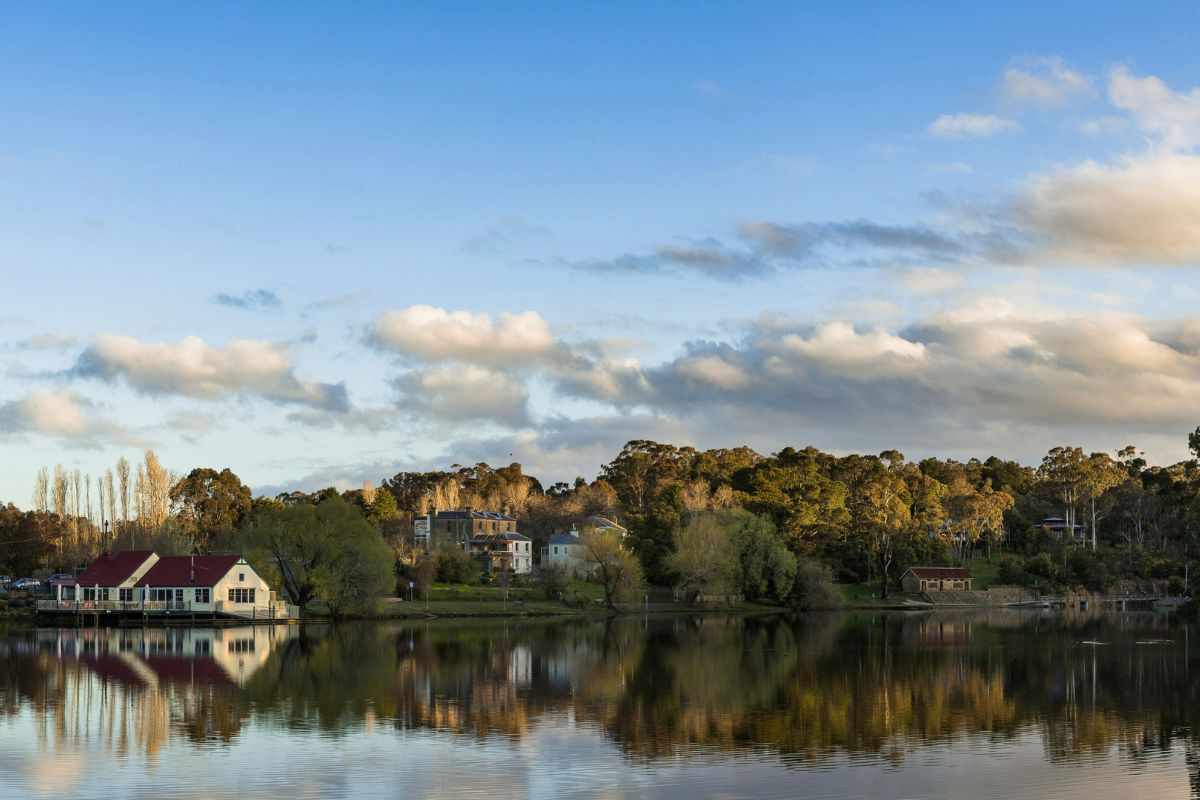
The Mornington Peninsula, the Yarra Valley, Geelong and the Bellarine, and Daylesford and the Macedon Ranges drew 22.8 million visitors in the year to June 2026. That’s just over half of everyone visiting regional Victoria. Demand isn’t the problem in these regions. The problem is what happens at 5pm.
- The Mornington Peninsula is regional Victoria’s biggest day-trip destination, with 5.4 million day trippers. The Yarra Valley and Geelong each have about 4 million.
- Day trippers in the belt spend $137 to $153 each. On the Murray it’s $265, and on the Great Ocean Road $202.
- The Yarra Valley has the lowest overnight share of any regional area at 24%. Only Melbourne is lower, because most of its visitors are Victorians coming in for the footy, a show or shopping, then heading home.
- The guests who do stay are worth as much as anywhere. Overnight visitors in the belt spend $211 to $227 a night, in line with Phillip Island and the Murray.
The longer view is harder to read because the national survey changed in 2025. Under the old method, some regions, including the Yarra Valley, were still well below 2019 for visitor nights in 2024 (see last year’s analysis). Regional figures on the new survey only go back to 2025, so the cleanest like-for-like test is international visitors, which use the same survey throughout.
International visitors still haven’t come back
Every region is still below 2019 for international visitors (year to June 2026 compared with calendar year 2019). Melbourne and Daylesford are closest to recovery, at about 10% down. The Grampians and the Great Ocean Road, which relied heavily on touring international visitors, are down 73% and 58%.
They’re a small slice of visitors in those regions, but they stay longer and spend more, so the drop hits accommodation, tours and restaurants on the touring routes hardest.
Day trips are carrying Victoria
Zoom out to the whole state and the same shape appears. Day trips have grown by more than a quarter since 2019. Domestic overnight trips have gone sideways for six years, and Visit Victoria’s forecast has them growing at only 1.7% a year to 2030.
The 1% fix
So what do you do with this? You don’t need a new market. You need a small slice of the people already visiting to stay one night. Pick a region and a percentage to see what that’s worth.
What if more day trippers stayed one night?
Pick a region and a share of its day trippers. See what one night each would add.
Extra visitor spend a year
What this means for operators
This is the bit I care about most, because it’s where marketing and the website actually make a difference. I’m not a tour operator, so I went looking at what other destinations are doing about the same problem. Victoria isn’t alone. In Dana Point, California, 77% of visitors are still day trippers.
Sell the evening, not the day. Most regional visitors already know you for lunch. Give them a reason to still be there at 9pm: a long dinner, a late tasting, music, stargazing. Japan has been working on this for years, after visitors kept saying there was “not enough to do in the evening”. And Hobart’s Dark Mofo turned the dead of winter into a reason to fly in.
Run events late, or over two days. This one surprised me. A 2024 study of 163 towns in northern Italy found festivals mostly bring day trippers. What made people stay the night was having beds nearby, plus heritage and nature. So a festival that wraps up at 4pm is a day trip. Finish at 10pm, or add something on Sunday morning, and it’s a weekend.
Package the stay. Dinner, bed and breakfast at one price is easier to say yes to than three separate bookings. Partner with the business next door if you only do one of the three. Los Angeles does a version of this, selling events with a hotel near the venue.
Reward the extra night, not the first. Mudgee in NSW ran a “Rest Rebate” this winter. Book Friday and Saturday at one of 12 places to stay, and the third night is free. It’s a clever way to avoid discounting, because the guest has already said yes to two nights.
Market “too good to drive home after”. In the day-trip belt around Melbourne, the drive home is the competitor. Name it in your copy. Further out, sell the second night. Moab in Utah built a whole campaign on this called “Should’ve Stayed Longer“, with lines like “One arch down. 2,000 to go.” Show people there’s too much to fit into one day. A two-day itinerary does that job for you.
Catch day trippers while they’re there. QR codes on tables, a midweek “stay tonight” rate and a short booking path on mobile all turn a lunch into a booking.
Join forces with your region. Nearly every campaign here was run by a whole destination, not one business. Get involved with your regional tourism board, and have your offers ready when they launch a campaign.
Make sure you show up in search for “stay”. People plan overnight trips online, on Google and more and more in AI tools. If your site only ranks for your name, you’re invisible at the moment someone decides where to sleep.
One honest caveat. Most of these campaigns are new and haven’t published results yet. Treat them as ideas worth testing, not proof.
Explore every region
All figures are for the year ending June 2026. You’re welcome to use these figures in articles, reports and presentations. Please credit and link to this page.
| Region | Visitors | Visitor spend | Stay overnight | Day tripper spend | Overnight spend per night | International vs 2019 |
|---|---|---|---|---|---|---|
| Melbourne | 72.8m | $32.71bn | 22% | $180 | $362 | -10% |
| Mornington Peninsula | 8.3m | $2.38bn | 35% | $145 | $219 | -33% |
| Geelong and the Bellarine | 6.2m | $1.91bn | 36% | $153 | $211 | -22% |
| Great Ocean Road | 4.1m | $1.80bn | 54% | $202 | $237 | -58% |
| Murray | 3.6m | $1.52bn | 52% | $265 | $208 | -22% |
| High Country | 3.5m | $1.44bn | 55% | $193 | $244 | -39% |
| Gippsland | 5.8m | $1.38bn | 45% | $156 | $134 | -47% |
| Yarra Valley and Dandenongs | 5.4m | $1.26bn | 24% | $137 | $226 | -22% |
| Daylesford and Macedon Ranges | 2.8m | $0.78bn | 39% | $137 | $222 | -9% |
| Grampians | 2.3m | $0.73bn | 49% | $206 | $190 | -73% |
| Phillip Island | 1.8m | $0.70bn | 60% | $169 | $213 | -41% |
| Total Victoria | 121.2m | $49.50bn | 28% | $177 | $272 | -10% |
Left Bank Design (2026). Victoria’s visitor economy in 2026, region by region. Analysis of Tourism Research Australia data via Visit Victoria. https://www.leftbankdesign.net/victoria-visitor-statistics/
Overnight spend per night is for domestic overnight visitors. International change compares the year ending June 2026 with calendar year 2019.
How we put this together
Regional figures come from Visit Victoria’s Victoria’s Visitor Economy dashboard, which publishes Tourism Research Australia’s National Domestic Tourism Statistics (DoTS) and International Visitor Survey (IVS) results. We used the Tourism Region view for the year ending June 2026.
TRA replaced its old domestic survey with DoTS in 2025 and has re-estimated earlier years to match. Statewide comparisons with 2019 and the year to June 2025 use those adjusted figures, so read long-run changes as indicative. Regional domestic data on the new survey is only available for the years ending December 2025 and June 2026. International figures use the same survey throughout and go back to 2019.
Spend per visitor, spend per night, average nights and overnight share are our own calculations. Spend is in nominal dollars, so it includes inflation. Estimates flagged as unreliable by TRA (small samples) are left out.
Sources
- Research and insights, including the Victoria’s Visitor Economy dashboard, year ending June 2026 (Visit Victoria)
- Domestic tourism statistics results and International Visitor Survey (Tourism Research Australia)
- Victoria’s visitor economy to reach $57.2 billion in 2030, Tourism Forecasts 2025–30, December 2025 (Visit Victoria)
- Tourism research and dashboards (Department of Jobs, Skills, Industry and Regions)
Header photo by Andrew Bunnell on Unsplash.
Frequently asked questions
How many people visit Victoria each year?
Victoria had 121.2 million visitors in the year to June 2026. That’s 87.4 million domestic day trips, 31.0 million domestic overnight visitors and 2.8 million international visitors.
What counts as a visitor in Victoria’s tourism data?
In Tourism Research Australia’s figures, a day trip is any trip of at least 50 km there and back, lasting four hours or more, with no overnight stay. An overnight trip means at least one night away, at least 40 km from home. So a drive from Melbourne to a Yarra Valley winery for lunch counts as a day trip.
How much do visitors spend in Victoria?
Visitors spent $49.5 billion in Victoria in the year to June 2026, up 7% on the year before. Domestic visitors spent $39.0 billion and international visitors $10.5 billion.
Which Victorian regions get the most day trippers?
Outside Melbourne, the Mornington Peninsula had the most day trippers in the year to June 2026, at 5.4 million. The Yarra Valley and Dandenong Ranges (4.1 million) and Geelong and the Bellarine (4.0 million) came next.
Which Victorian region has the highest visitor spend?
Outside Melbourne, the Mornington Peninsula had the highest visitor spend in the year to June 2026, at $2.38 billion, followed by Geelong and the Bellarine ($1.91 billion) and the Great Ocean Road ($1.80 billion).
Which Victorian region has the most overnight visitors?
Melbourne has the most overnight visitors by volume. As a share of all visitors, Phillip Island leads, with 60% staying at least one night, followed by the High Country and the Great Ocean Road at about 55%.
Has Victorian tourism recovered since COVID?
Spend and day trips are well above 2019 levels. Domestic overnight trips are roughly back at 2019 levels, about 31 million a year, and international visitors are still about 10% below 2019 across the state.
Can I use these charts on my website?
Yes. Please credit Left Bank Design and link to this page. The full dataset is available as a CSV download above.